
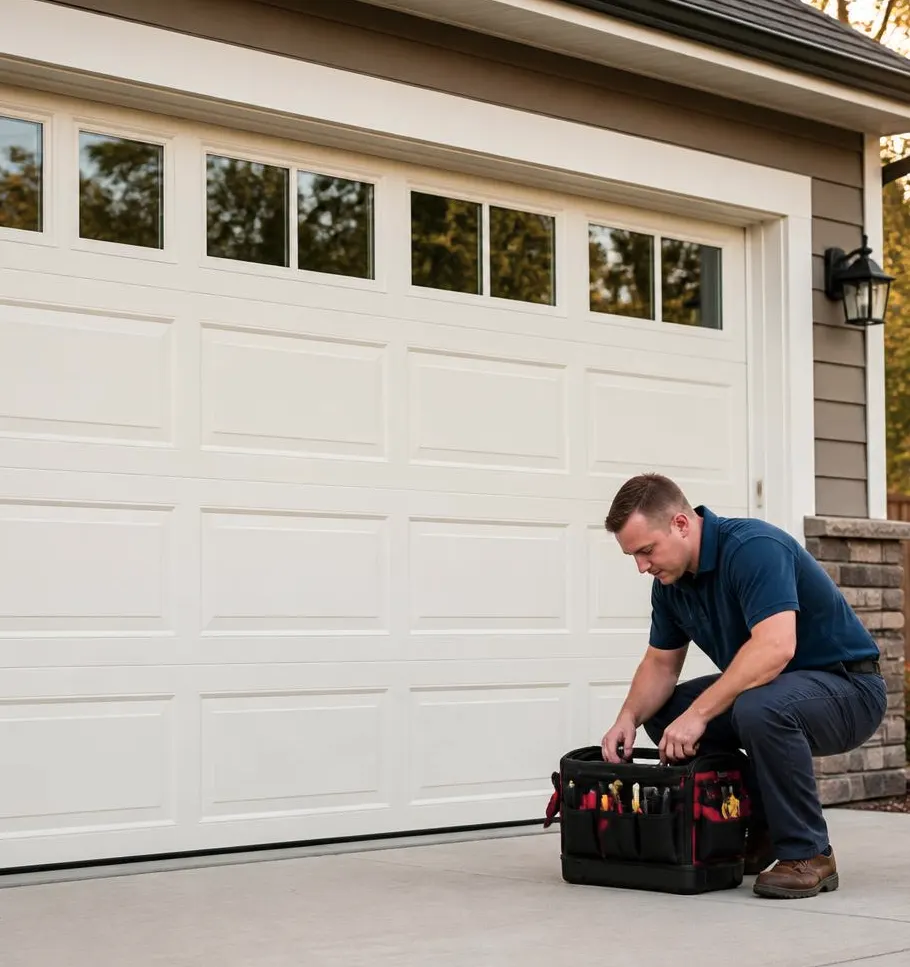
What Techs See This Time of Year
Every October, the calls start the same way: "It worked fine all summer, and now it's slow" or "The door opened six inches and stopped." A technician shows up and finds the usual culprits of a Tuscarawas County fall — a rubber seal gone stiff and cracked from UV exposure, hinges that haven't seen lubricant since spring, or a spring that's been slowly losing tension all year and finally can't handle the added resistance of cold, thickened grease in the rollers. None of these are dramatic failures. They're small issues that get worse once temperatures drop and the door has to work harder just to move.
Why Cold Weather Is Harder on Garage Doors Than You Think
A garage door is a spring-loaded machine, and metal behaves differently in the cold. Torsion springs lose a bit of tension as temperatures fall, which means a door that was perfectly balanced in July can feel heavy or uneven in December. Add in humid summers that swell wood panels and winter dryness that shrinks them back, and you get seasonal movement that loosens hardware over time. Big temperature swings, which this area gets plenty of, put real stress on every moving part of the system.
Start With the Weatherstripping
The rubber seal along the bottom of the door and the vinyl strips along the sides are your first line of defense against snowmelt, wind-driven rain, and road salt spray tracked in on tires. Check for:
- Cracking, stiffness, or sections that have pulled away from the track
- Gaps you can see daylight through when the door is closed
- A bottom seal that's flattened or torn from a winter of scraping over ice buildup
Replacing weatherstripping is inexpensive and one of the few garage door jobs a handy homeowner can do in an afternoon. It also makes a noticeable difference in how much cold air and road salt residue gets into the garage.
Don't Ignore the Threshold
If your garage floor doesn't have a sealed threshold, melting snow and ice can pool right at the base of the door and refreeze overnight, sometimes freezing the door to the floor. A simple rubber threshold seal keeps that water where it belongs.
Lubricate the Moving Parts the Right Way
Hinges, rollers, and the torsion spring itself all need lubrication before cold weather sets in, but not just any lubricant will do. WD-40 is a cleaner, not a lubricant — it'll strip old grease without replacing it. Use a silicone-based or lithium-based garage door lubricant instead, applied to:
- Hinges at every pivot point
- Roller bearings (not the track itself)
- The torsion spring, lightly coated to prevent rust from condensation
- The lock mechanism, if your door has one
Thickened, dried-out grease is exactly what makes a door strain and groan once the temperature drops, and that extra strain is what pushes a weak spring past its limit.
Check the Balance and Listen for Spring Trouble
Disconnect the opener and lift the door halfway by hand. It should stay in place on its own. If it drifts up or falls down, the springs are out of balance and working harder than they should — a problem that tends to come to a head in cold weather when metal is less forgiving. A door that's scraping, grinding, or making a loud bang when it opens or closes is also telling you something's wrong, and it's not a job to troubleshoot yourself. Torsion springs are under enormous tension and are one of the few parts of a garage door system that are genuinely dangerous to handle without the right tools.
Protect the Opener and Sensors
Garage door openers rely on sensitive electronics, and extreme cold can affect the lubricant in the gears or cause the safety sensors near the floor to drift out of alignment if they've been bumped during the busier fall season. Wipe the photo-eye sensors clean of dust and cobwebs, confirm the small indicator lights are solid rather than blinking, and test the remote and wall button for consistent response. If you have a battery backup, check it now rather than during a January power outage, when you'll want the door to still open on demand.
Clear the Track and Inspect the Rollers
Road salt tracked in on tires, combined with winter humidity swings, speeds up corrosion on metal tracks and rollers. Wipe tracks down with a damp cloth to remove grit, and look for rollers that are cracked, flat-spotted, or wobbling in their brackets. Worn rollers put uneven pressure on the track and the opener, and that uneven pressure shows up as noise, jerky movement, or a door that comes off-track during the first hard freeze.
Consider Insulation If You Haven't Already
If your garage is attached to the house or you use it as a workspace, an uninsulated steel door lets a lot of cold through. Insulated garage doors or retrofit insulation kits help stabilize the temperature in the space, which matters both for comfort and for protecting anything stored against the shared wall from the big temperature swings typical of a Tuscarawas County winter.
When to Call New Philadelphia Garage Door
If your door is off-balance, making new noises, or the springs look stretched or rusted, that's a job for a technician rather than a weekend project — springs are dangerous under tension and getting the balance wrong can damage the opener. Our garage door maintenance service covers a full inspection of springs, rollers, cables, and hardware, and we handle spring replacement with the right tools and safety equipment if a spring is nearing the end of its life. Catching these issues in October beats dealing with a stuck door during a January cold snap.
If you're in New Philadelphia, Dover, Uhrichsville, or anywhere else in Tuscarawas County and want your garage door checked before winter sets in, give New Philadelphia Garage Door a call. We'll have you ready for the season, on time and done right.