
Short answer: reinforce your garage door's track and panels, check the opener's hold strength, and seal the bottom and sides before the wind picks up — because once a garage door fails in high wind, the rest of the house is far more likely to fail with it.
Most homeowners picture roof damage or flying debris when they think about storm risk. Few think about the garage door, even though it's usually the largest single opening in the home's exterior wall. A standard double door can be 16 feet wide and 7 feet tall — over 100 square feet of surface area that wind can push against. When that door buckles or blows in, wind rushes into the garage with nowhere to go but up, pressurizing the attic and roof from the inside. That's how a lot of wind-related roof failures actually start: not from the top down, but from the garage door in.
Why This Matters More Here, Not Just in Spring
Tuscarawas County's severe storm reputation usually points to spring — the tornado and thunderstorm season that builds through March, April, and May. But the wind events that do the most quiet, cumulative damage to garage doors often come earlier, in the fall and winter. Strong cold fronts moving through Ohio in late autumn and winter regularly bring high wind advisories, gusty squalls ahead of temperature drops, and the kind of sustained pressure that finds every weak point in an aging door. A door that's been flexing in 40-50 mph gusts all winter is already compromised by the time spring storm season arrives.
That's the real case for doing this work now, in October, rather than waiting: a door that's reinforced and properly maintained heading into winter is also a door that's ready for next spring's storms, with no extra work required.
Signs Your Door Is the Weak Point
Walk out to the garage and actually look at the door, not just open and close it. Common warning signs include:
- Visible flex or bowing in the panels when the wind gusts, especially on wider double doors
- Gaps along the track where rollers sit loosely or the track itself has pulled away from the wall
- Worn or missing weatherstripping at the bottom and sides, which lets wind-driven rain and pressure in
- Rust or pitting on hinges and tracks from winter road salt tracked in on vehicles, which weakens hardware exactly where it needs to hold
- A struggling opener that seems to labor on windy days — a sign the door isn't moving as smoothly or sealing as tightly as it should
Any one of these is worth addressing on its own. Together, they describe a door that's likely to fail under real wind load, not just look a little rough.
What Actually Reinforces a Garage Door
Bracing and Reinforcement Kits
For many existing doors, a horizontal bracing kit — steel struts that run across the back of the panels — meaningfully increases wind resistance without replacing the door. This is the lower-cost path, typically a few hundred dollars in parts and labor depending on door size, and it's a reasonable option for a door that's otherwise in good shape.
Track and Hardware Upgrades
Tracks need to be solidly anchored, not just screwed into aging wood jambs that have shifted over years of freeze-thaw cycles. Heavier-gauge tracks and reinforced end hinges hold up better under repeated wind pressure than the standard hardware builders often install.
Wind-Rated Doors
If the door is old, already damaged, or due for replacement anyway, a wind-rated door is the more complete solution. These are engineered and tested to resist specific pressure loads, with reinforced panels and tracks built in rather than added on. The trade-off is upfront cost versus a retrofit — but for a door nearing the end of its life, replacement often makes more sense than reinforcing something that's going to need replacing soon regardless.
Opener and Spring Considerations
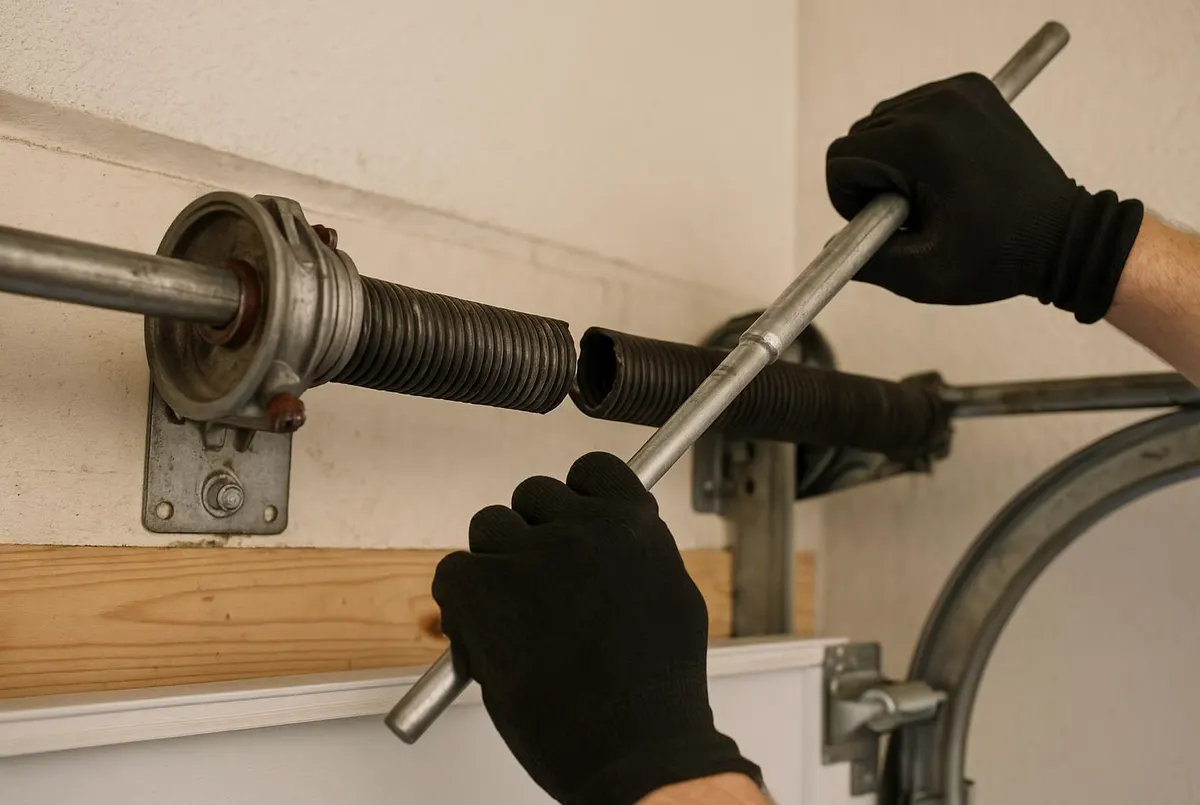
A reinforced door still needs an opener and spring system strong enough to hold it steady under wind load, not just lift it on calm days. Torsion springs under extra strain from a heavier, braced door wear faster, and an underpowered opener can struggle to keep the door seated against gusts. Both are worth having assessed at the same time as any bracing work, not after.
Sealing Against Wind-Driven Weather
Wind rarely arrives alone — it brings rain, and in winter, it brings cold air that finds every gap. Fresh bottom seals and side weatherstripping do double duty: they keep wind-driven rain from pushing underneath the door during a storm, and they cut down on the cold draft that makes an attached garage miserable in January. It's a small, inexpensive fix that pays off in both seasons.
When to Call New Philadelphia Garage Door
If your door is flexing in the wind, the track has visible gaps, or you're just not sure whether an older door can handle another winter of Ohio wind, it's worth having it looked at before the first real wind advisory rather than after. New Philadelphia Garage Door can assess the track, hardware, and panel condition as part of a garage door maintenance visit, tighten and reinforce what's salvageable, and advise honestly on whether a bracing kit makes sense or whether garage door installation with a wind-rated model is the better long-term call for your situation. We also check springs and opener strength while we're there, since a reinforced door is only as reliable as the system holding it up.
Serving New Philadelphia, Dover, Uhrichsville, Dennison, Strasburg, Sugarcreek, Newcomerstown, and across Tuscarawas County — call New Philadelphia Garage Door today to get your door checked and ready before the wind picks up this season.